Why a Digital Footprint Matters for a Local Business
Not that long ago, a local business could get by with a sign above the door, a few business cards, a mention in the local paper and Dave from down the road telling everyone you were “alright, to be fair”.
And that worked.
Sort of.
But times have changed. Now, before anyone rings you, visits you, books you or spends money with you, they do what we all do. They look you up online.
Because apparently walking into a business and forming your own opinion is far too risky these days.
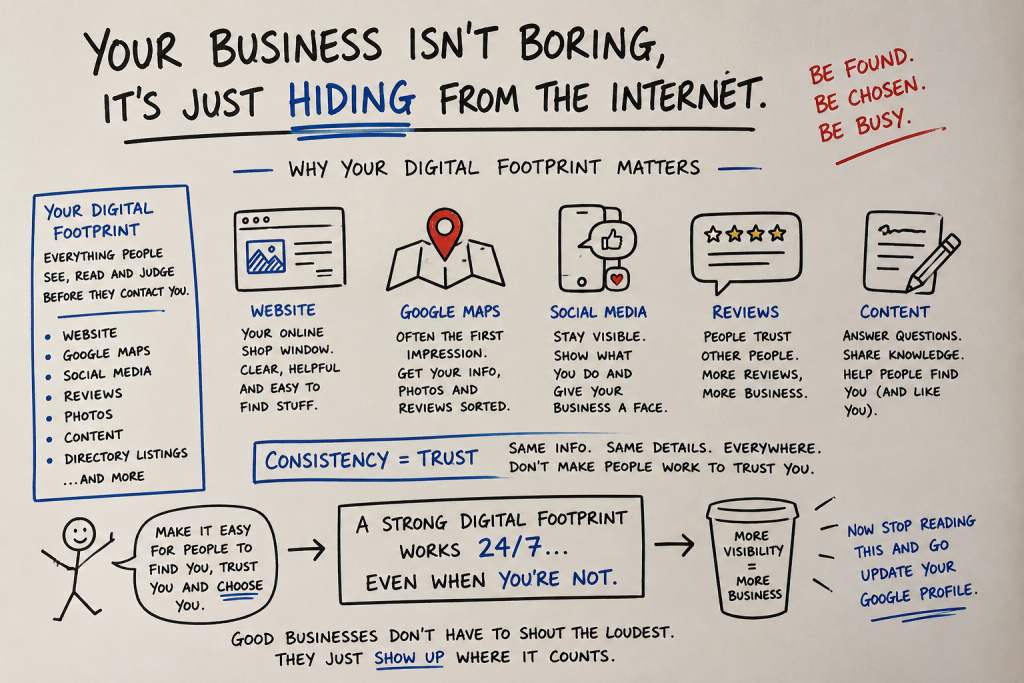
Your digital footprint is basically everything people can find about your business online. Your website, Google Maps listing, social media pages, reviews, photos, opening hours, blogs, directory listings and whatever else is floating around on the internet with your name attached to it.
And whether you like it or not, people are judging you before they have even spoken to you.
Cheery, isn’t it?
Your website is your online shop window
Your website is still one of the most important parts of your digital footprint.
Yes, social media is useful. But you do not own Facebook, Instagram, LinkedIn or TikTok. They can change the rules whenever they like, usually just after you’ve worked out how to use the last version.
Your website is your own space.
It should clearly explain who you are, what you do, where you are, where you work and how people can contact you. Nothing revolutionary there, but you would be amazed how many websites make this feel like a treasure hunt.
A decent local business website does not need to be massive. It just needs to be clear, useful and up to date.
Show your services. Add real photos. Include reviews. Show examples of your work. Answer the questions people always ask you. Make the phone number easy to find.
If someone lands on your site and still has no idea what you do, where you are based or whether you are still trading, that is not “minimal design”. That is just annoying.
Google Maps matters more than people think
For local businesses, Google Maps can be absolutely massive.
When someone searches for “bathroom fitter near me”, “local pub”, “dog groomer nearby”, “office supplies Leicester” or “garage in Glenfield”, they are not usually looking for a ten-page essay. They want someone local, reliable and easy to contact.
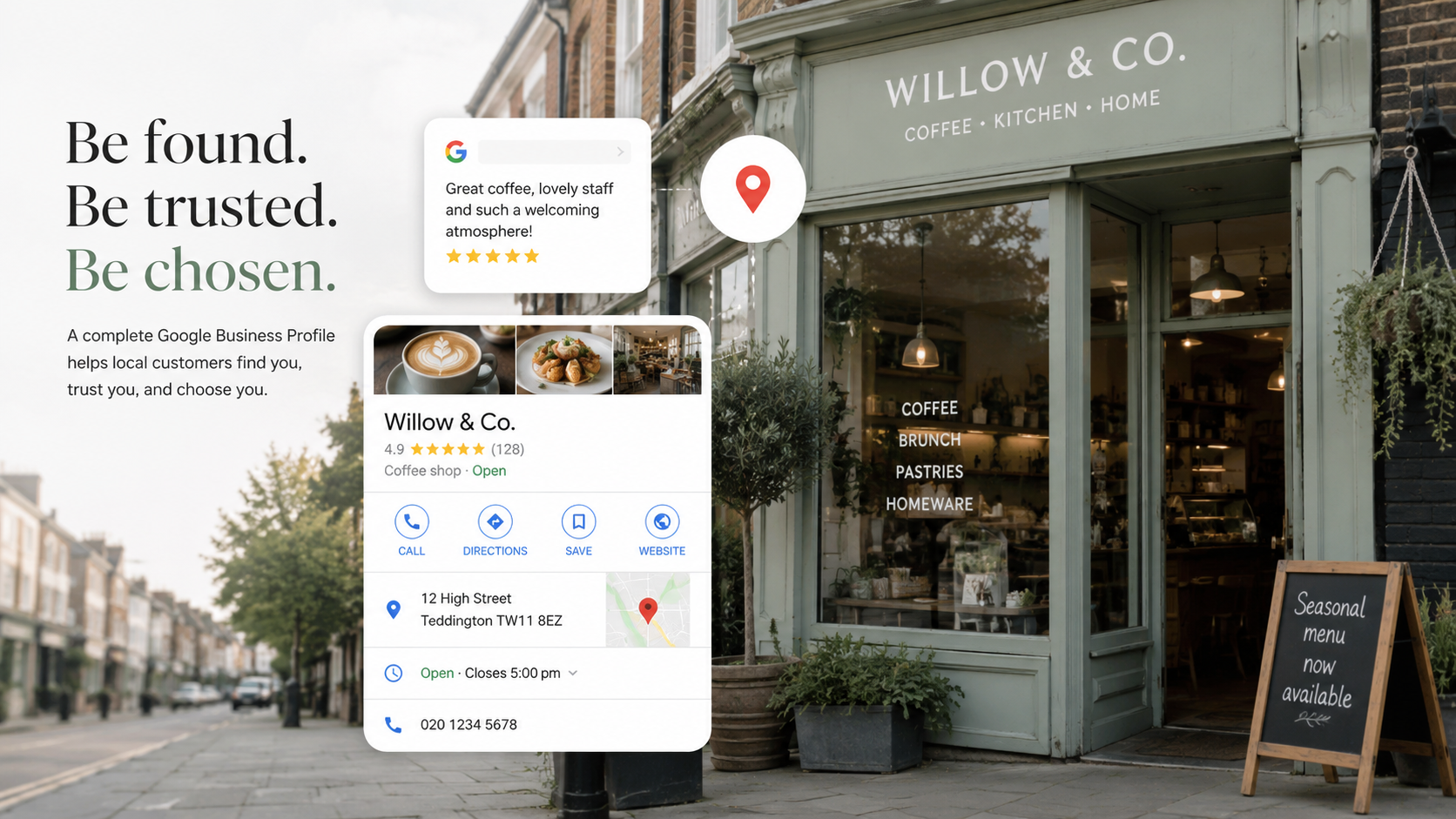
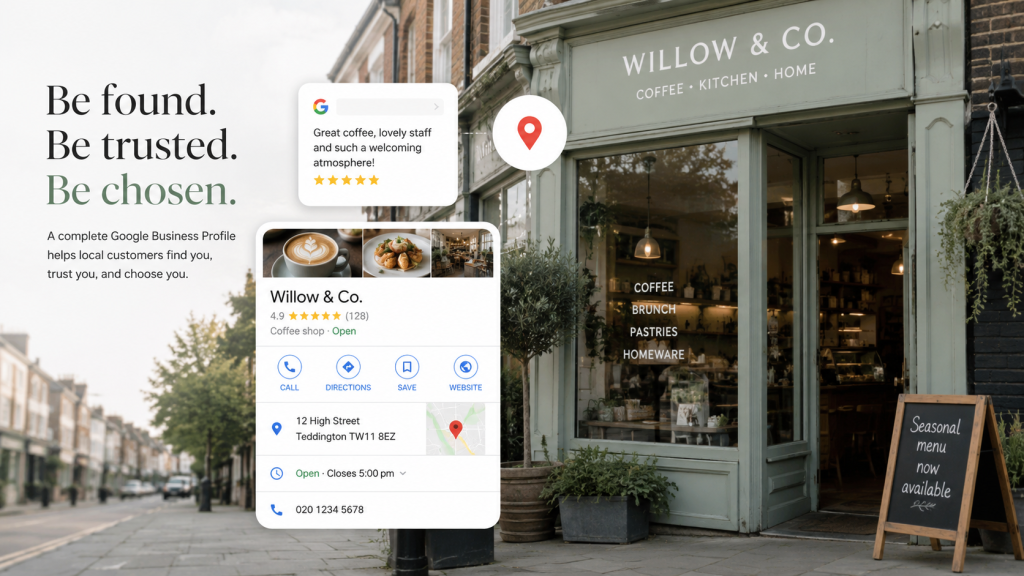
That is where your Google Business Profile comes in.
Your opening hours, address, phone number, website link and services need to be correct. Not “close enough”. Correct.
Because nothing builds trust like driving to a business that Google says is open, only to find the shutters down and a handwritten note saying “back Tuesday”.
Photos matter too. Add proper, recent photos of your work, premises, products or team. Not one blurry image from 2018 taken on a phone with the lens covered in pocket fluff.
And then there are reviews.
Reviews are huge. People trust other people more than they trust businesses talking about themselves. A steady stream of genuine reviews tells potential customers that you are active, reliable and not operating from a shed with a Gmail address and a dream.
You do not need 500 reviews overnight. But you should ask happy customers to leave one.
Politely, obviously. Don’t chase them down the street with a QR code.
Social media keeps you visible
Social media is not just about likes, shares and pretending every cup of coffee is “content”.
For local businesses, it helps keep you visible. It reminds people you exist. It shows you are active. It gives your business a bit of personality.
Facebook is useful for local communities, events, updates and village groups. Instagram is great for visual businesses like trades, interiors, food, fitness, beauty and anything where the finished result actually looks good. LinkedIn is better for business-to-business content, professional updates and industry posts.
The trick is to post things people might actually care about.
Show recent work. Share customer feedback. Talk about what you do. Promote offers. Answer common questions. Show behind the scenes. Mention local events. Put a face to the business.
And please, do not post the exact same thing into every local Facebook group fourteen times a week.
There is visibility, and then there is being the digital equivalent of someone shouting through a megaphone outside Tesco.
Content helps people find you
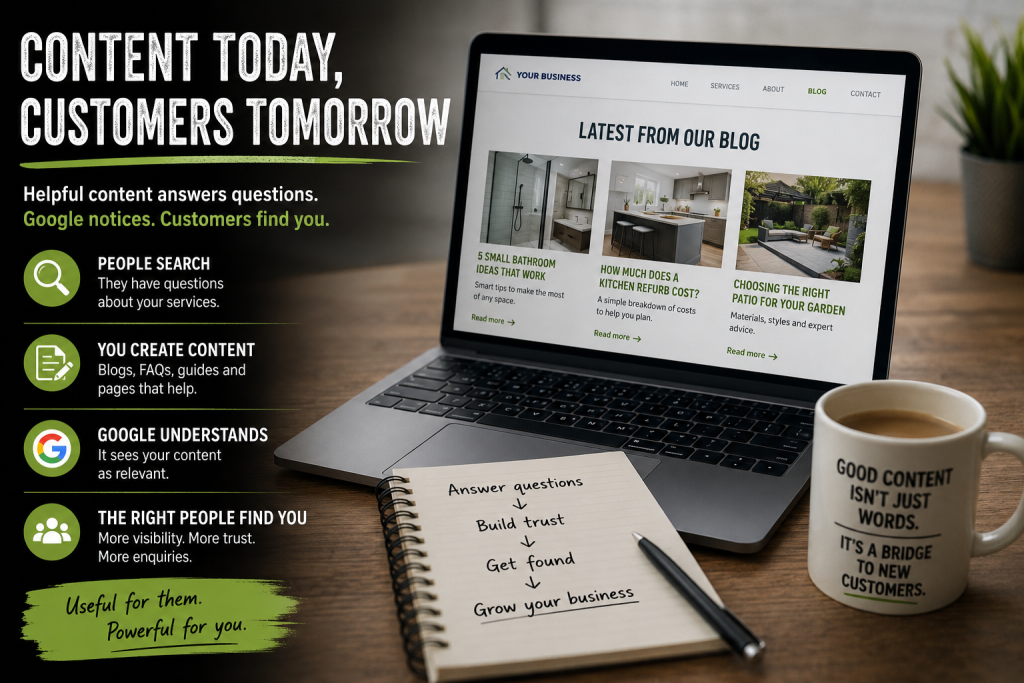
Blogs, FAQs, case studies and service pages all help build your digital footprint.
This is where you answer the questions people are already typing into Google.
How much does it cost?
How long does it take?
What areas do you cover?
What should people look out for?
What options are available?
A bathroom business could write about refurbishment costs, walk-in showers, small bathroom ideas or accessibility features.
A pub could post about events, live sport, food nights, private hire or local fundraisers.
A sports club could share fixtures, match reports, sponsor news and community updates.
This sort of content helps Google understand what you do, but more importantly, it helps customers understand why they should choose you.
Which is quite useful, unless your business plan is based entirely on people guessing.
Consistency builds trust
Your online presence needs to match up.
Your website, Google listing, Facebook page, Instagram profile and directory listings should all show the same basic information.
Same name. Same phone number. Same address. Same opening hours.
If your website says one thing, Facebook says another and Google thinks you closed during lockdown, people will not hang around trying to solve the mystery.
They will just choose someone else.
Your digital footprint works when you are not
The best thing about a good digital footprint is that it keeps working when you are not.
Someone can find your website at 11pm, check your reviews, look at your photos, read about your services and send an enquiry while you are sat on the sofa pretending you are not scrolling through your phone.
That is why it matters.
A strong digital footprint makes your local business easier to find, easier to trust and easier to contact.
And in a world where people research everything before making a decision, from a new bathroom to where to get a sandwich, being visible online is not really optional anymore.
Unless, of course, your marketing strategy is still “Dave will tell people”.
Bold choice.